
When a garage door occupies a substantial portion of a home’s exterior, it becomes much more than a way to enter the garage. It becomes part of the architecture. That distinction is particularly important on a custom residence. The proportions of the door affect the balance of the façade. Its materials interact with stone, siding, roofing, windows and exterior trim. Its glass influences both privacy and natural light. Its hardware can reinforce an architectural style—or distract from it.
For that reason, a luxury garage door should not be approached simply as an accessory selected near the end of construction. It should be considered an architectural component of the home. At Carriage House Door, customization is at the center of the design process. Rather than limiting a project to a small selection of predetermined designs, materials and finishes, we work with homeowners, builders, architects and designers to develop garage doors around the requirements and design intent of the individual residence. The result is something fundamentally different from a standard garage door with upgraded options. It is a door created for the home.
What Is a Truly Custom Luxury Garage Door?
A truly custom luxury garage door is designed and handcrafted around the architecture, dimensions and aesthetic requirements of an individual project. Instead of simply selecting predetermined panels, colors and windows, the design can incorporate specific proportions, materials, wood species, glass, textures, metal details, hardware and other architectural elements.
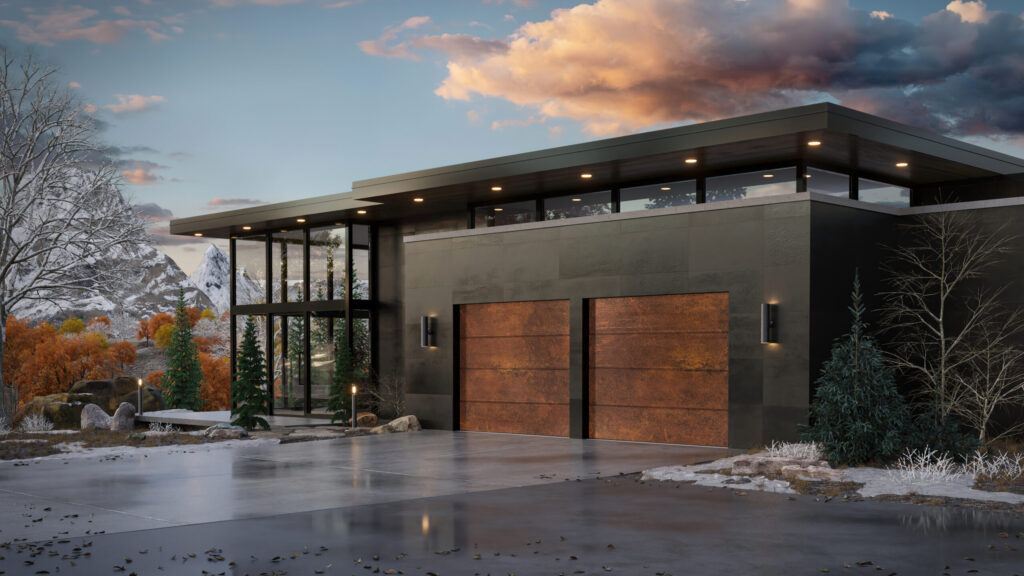
That distinction between custom and merely customized is important. Many garage doors allow a homeowner to choose from a menu of options. You may be able to select a panel design, paint color, window configuration and decorative hardware. Those choices can certainly create an attractive door.
A fully custom door begins somewhere else: with the project. The conversation may start with architectural elevations, an inspiration image, a wood species used elsewhere on the residence, a distinctive window pattern, a challenging opening or even a concept that has never previously been built. The objective is not simply to find the closest available door. The objective is to develop the right door.

Custom vs. Customized: What’s the Difference?
Consider the difference between ordering a suit in your size and having one made specifically for you. Both can fit. Only one begins with you. The same principle applies to architectural garage doors. A customized production door generally starts with an existing platform. The customer then chooses among the manufacturer’s available colors, windows, panels and accessories.
A custom garage door can begin with the architecture itself. That opens considerably more possibilities. A designer may want the horizontal lines of the garage door to align with adjacent siding. An architect may want window openings to correspond with windows elsewhere on the elevation. A homeowner may want the garage door constructed with the same species of wood used at the front entry. A contemporary residence may call for wood combined with stainless steel, aluminum, copper or architectural glass. A traditional home may require carefully proportioned trim and decorative hardware that evokes an authentic carriage-house aesthetic without sacrificing the convenience of a modern operating garage door. The difference isn’t simply having more options. It is having greater design freedom.
Proportion Comes Before Decoration
Before choosing hardware or stain colors, consider proportion. Garage doors are unusually large architectural elements. Small proportional decisions therefore have a significant visual impact. A few inches of difference in rail width, window height or trim dimension can change the character of an entire door. Horizontal elements can make a broad opening feel even wider. Vertical elements can add height. Large glass openings can create a lighter contemporary appearance, while smaller divided lites can establish a more traditional rhythm. Arches, rails, stiles and overlays all contribute to the overall composition. On a truly custom project, those decisions should be intentional.
Material Selection Changes the Character of the Door
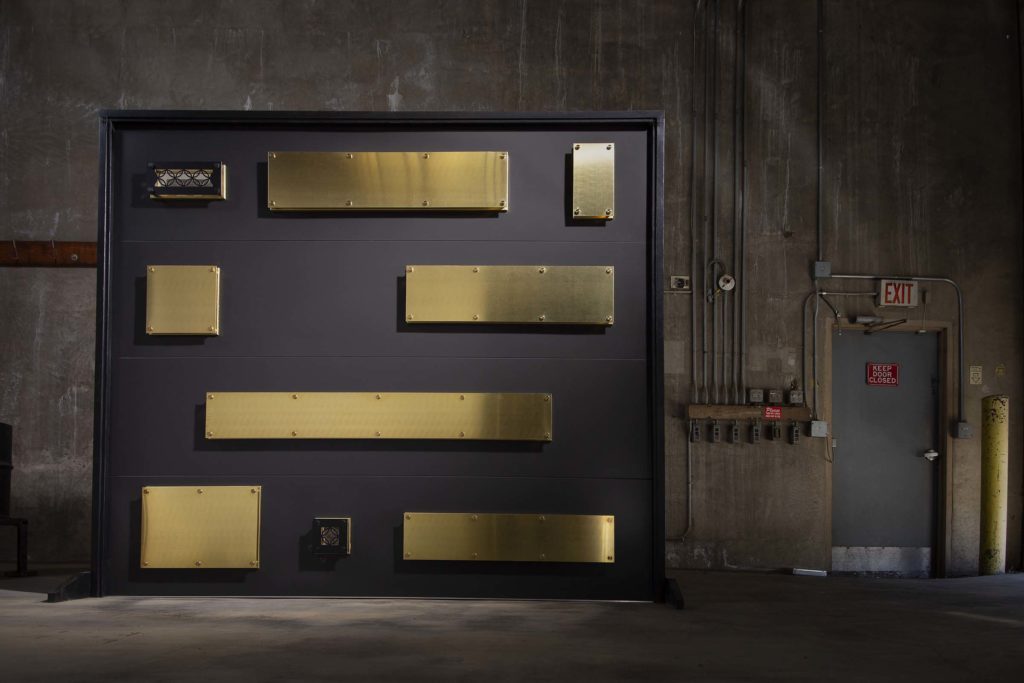
Material is one of the most powerful tools available to a garage-door designer. Wood, steel, aluminum, glass and specialty materials each communicate something different architecturally. And within those categories, the possibilities become even broader.
The Natural Character of Wood
Wood has an advantage that few manufactured materials can replicate: variation. Every board has its own grain, color and character. That makes wood particularly appropriate for homeowners who want a garage door that feels handcrafted rather than manufactured. Carriage House Door’s Wood Collection includes an extensive range of wood species and specialty materials, including options such as Western Red Cedar, Douglas Fir, Sapele Mahogany, Black Walnut, Ipe, reclaimed woods, Burmese Teak and Shou Sugi Ban. Each creates a different architectural impression.
Western Red Cedar can bring warmth and strong natural character to both traditional and contemporary homes.
Vertical Grain Douglas Fir provides a pronounced linear grain that can work beautifully with architecture emphasizing clean lines.
Sapele Mahogany offers rich coloration and distinctive grain suitable for refined architectural applications.
Black Walnut can create a dramatic, sophisticated appearance, particularly when paired with minimalist detailing or metal accents.
Ipe provides deep coloration and a dense visual character.
Reclaimed wood introduces history, texture and natural variation that cannot simply be reproduced with a printed finish.
The selection process should consider more than appearance, however. Exposure, finish, color and maintenance expectations are also important. The appropriate material for a protected opening may not necessarily be the same choice for a door exposed to intense afternoon sun. That is one reason material decisions should be made as part of the larger design conversation.
Steel Can Be Custom Too
Luxury does not automatically mean wood. Steel can be an excellent choice where durability, insulation and lower finish maintenance are priorities. Carriage House Door’s Steel Collection, for example, uses insulated construction and can incorporate custom designs, glass and trim details. A steel door can therefore retain the proportions and architectural detailing expected on a custom residence while providing a different performance and maintenance profile than natural wood. For some projects, that balance makes steel the better architectural decision.
Contemporary Materials Expand the Possibilities
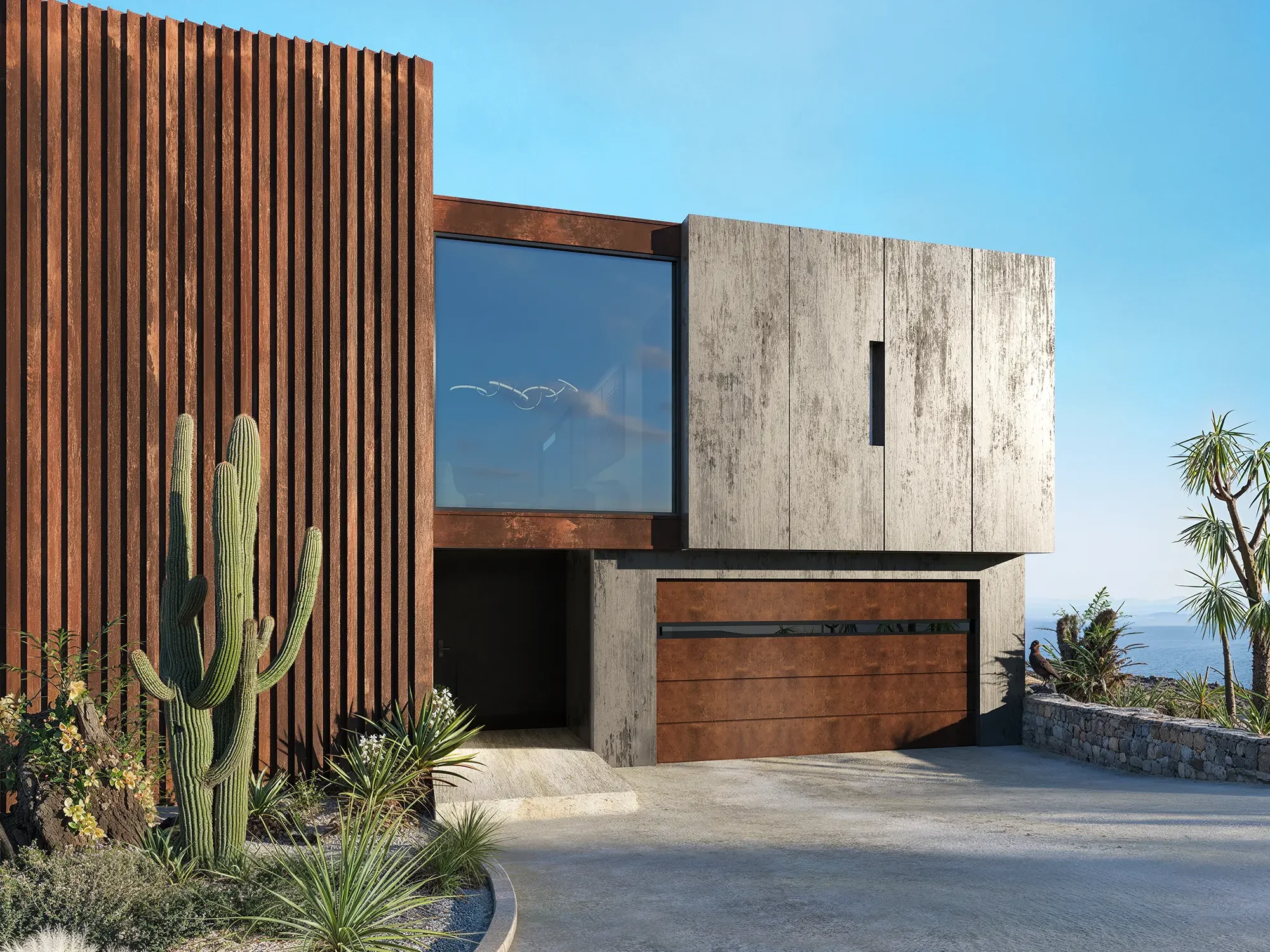
Contemporary architecture creates opportunities to move beyond conventional ideas about what a garage door should look like. Wood can be paired with aluminum. Glass can become a dominant design element rather than a small window insert. Copper can introduce warmth. Stainless steel can create crisp visual contrast. Dark anodized aluminum can establish clean lines. Carriage House Door’s Contemporary Collection demonstrates this approach through combinations of wood, metal, glass and other specialty materials. The lesson is simple: the material palette of the garage door does not need to exist separately from the material palette of the house. They can be designed together.

Handcraftsmanship Matters
There is another important distinction between an ordinary door and a luxury custom door: how the design becomes a physical object. A drawing can establish the concept. Craftsmanship determines whether that concept succeeds. Custom fabrication requires an understanding of materials that goes beyond appearance. Wood moves. Different species machine differently. Grain orientation affects visual continuity. Metal details must be properly proportioned. Glass has both aesthetic and functional implications. Trim dimensions that look correct on a computer screen must still look correct when translated to a door that may be sixteen or eighteen feet wide.
This is where experienced craftsmanship becomes important. Carriage House Door’s company literature describes its doors as individually handcrafted to project specifications and emphasizes experience working with wood, metal and composite materials. That experience allows design decisions to be evaluated not only for appearance but also for whether they can function successfully as an operating door.
Design Freedom Still Has to Respect Function
Can absolutely anything be made into a functioning garage door? Not necessarily. And that is an important part of responsible custom design. A garage door is not simply an exterior panel. It is a large moving assembly. Weight, balance, hardware, track configuration, section construction, glass and opening geometry can all affect operation. Carriage House Door’s FAQ summarizes the issue well: customization is encouraged, but design ultimately has to respect the functionality of the door. That means the best custom-design process is collaborative.
The homeowner or architect brings the vision. The door designer and manufacturer help determine how that vision can become a practical operating system. Sometimes that requires modifying proportions. Sometimes a material needs to change. Sometimes the construction behind the visible surface needs to be engineered differently. Those adjustments should not be viewed as limitations on creativity. They are part of turning an architectural idea into a functioning product.
Glass Is an Architectural Material
Windows are sometimes treated as an accessory added after the garage-door design has been chosen. On a luxury door, glass deserves more consideration. It can influence:
- Natural light
- Privacy
- Color
- Reflection
- Architectural style
- Perceived weight of the door
- Visual connection between the garage and exterior
Clear glass can create openness. Bronze tones can complement warm woods and metals. Satin or other privacy-oriented glass can allow light into the garage while reducing visibility. Textured and antique-inspired glass can reinforce traditional architecture. Carriage House Door offers a broad selection of architectural glass options, including clear, reeded, bronze, satin etched, seedy and restoration-inspired selections. But the glass type is only half of the decision. The proportion and placement of the glass may be even more important. A narrow horizontal band of glass creates a completely different architectural effect than a row of traditional divided lites. The same material can therefore produce dramatically different results depending on how it is composed.

Hardware Can Change the Entire Personality of a Door
Decorative hardware is another detail where restraint and proportion matter. Strap hinges, handles, clavos and other decorative elements can add character to traditional carriage-style doors. But more hardware does not automatically create a more luxurious result. Hardware should support the architecture.
On a traditional residence, hand-forged or substantial metal details may become an important visual feature. On a contemporary residence, the best hardware may be minimal—or visually concealed altogether. Scale matters as well. Hardware that looks substantial in a catalog image may appear undersized when installed on a large double garage door. That is why hardware should be selected in relation to the dimensions and design of the complete door.
Texture Adds Another Layer of Customization
Wood species is only one part of how a wood door looks. Surface texture changes how light interacts with the material and how strongly the grain is perceived. Depending on the material and design, Carriage House Door wood options can include smooth, resawn and wire-brushed appearances. A smooth surface creates a refined finish. Resawn material can introduce more visible texture. Wire brushing can emphasize grain and give the wood additional depth. These details are especially effective when viewed across a large surface, where subtle changes in texture can make a significant architectural difference.
The Opening Style Can Be Part of the Design
Most homeowners are familiar with the sectional overhead garage door. It remains an extremely practical solution because the door travels upward and then horizontally along tracks inside the garage. But custom architectural projects can sometimes call for different approaches. Depending on the project, custom doors may involve sectional overhead configurations, swing doors, bi-fold concepts or other specialized opening systems. The appropriate configuration depends on the architecture, opening dimensions, available headroom and sideroom, structural conditions, door weight, operator requirements and other project-specific considerations. For this reason, opening style should be discussed early—particularly when the architect wants the garage door to behave differently from a conventional sectional door.
Should the Garage Door Match the Front Door?
Usually, the better goal is to coordinate rather than copy. A garage door and front entry can share a wood species without using the same panel design. They can repeat a metal finish. They can share glass characteristics. Or they can use complementary materials while maintaining consistent proportions. The same principle can extend to driveway gates, pedestrian gates and shutters. Carriage House Door also produces complementary architectural elements such as gates and shutters, allowing a property to develop a consistent design language without making every element identical. That is particularly valuable on larger custom residences where several exterior elements are visible at once.
When Should You Start Designing a Custom Garage Door?
Earlier than many homeowners expect. For a custom residence, garage-door planning is best incorporated while exterior materials and architectural details are still being finalized. Early coordination gives the project team time to consider:
- Rough opening dimensions
- Headroom
- Sideroom
- Track requirements
- Structural support
- Door thickness
- Glass
- Finish
- Exterior trim
- Operator location
- Ceiling conflicts
- Lighting
- Mechanical systems
Waiting until the garage is nearly complete can unnecessarily restrict the available solutions. For example, a distinctive track configuration may require additional headroom. A large custom door may require structural considerations around the opening. A specific visual alignment may require dimensions to be coordinated before exterior finishes are installed. For architects and builders, the garage door should therefore be treated as part of the building envelope and opening design—not merely as equipment ordered after framing.
Who Should Consider a Fully Custom Garage Door?
Not every project requires one. A high-quality standard door may be entirely appropriate for many homes. A fully custom approach becomes especially valuable when:
- The residence has distinctive architecture
- The garage occupies a prominent portion of the front elevation
- An architect has developed specific proportions or details
- The homeowner wants an unusual wood species or material
- Standard designs conflict with the home’s window geometry
- The project requires a nonstandard opening
- The homeowner wants to coordinate the garage door with gates or shutters
- A particular glass or metal treatment is central to the design
- The goal is to create something genuinely individual
On these projects, the garage door is not simply filling an opening. It is completing an architectural composition.
Frequently Asked Questions About Custom Luxury Garage Doors
Yes. Custom garage-door manufacturers can work with architects, builders and designers to develop a door around project drawings and specifications. Carriage House Door specifically works with design professionals and can prepare scaled designs, specifications and material call-outs for custom projects.
Custom construction provides substantially more dimensional flexibility than many standard production doors. However, maximum dimensions depend on the door design, material, construction, glass, operating system and performance requirements. The manufacturer should evaluate unusually large openings during the design process.
Depending on the design, options can include natural woods, steel, aluminum, glass, copper, stainless steel and specialty materials. Carriage House Door offers numerous premium wood species as well as metal and architectural glass options.
There is no single best material. Wood provides natural character and extensive design flexibility. Steel can offer excellent durability and insulation. Aluminum and glass can be particularly effective for contemporary architecture. The right material depends on the architecture, exposure, desired appearance, maintenance expectations and performance requirements.
Natural exterior wood requires finish inspection and maintenance. The amount of attention needed depends on the species, finish, sun exposure, moisture and climate. Proper finishing and periodic inspection are important to long-term appearance and performance.
Yes. Privacy can be addressed through tinted, etched, textured, laminated and other glass options depending on the door design and project requirements.
Ideally, begin the conversation during architectural design or before framing and exterior finishes are finalized. Early planning allows opening dimensions, structure, headroom, track, operators and visual details to be coordinated with the rest of the project.

The Handcrafted Difference
The most successful luxury garage doors rarely begin with the question:
“Which model should we choose?”
They begin with better questions.
What does the architecture need?
What material belongs on this house?
How should the door relate to the windows?
Should it disappear into the façade or become a focal point?
What should someone notice when approaching the home?
How should the wood, glass and metal look five or ten years from now?
Those questions lead to a different kind of garage door. One where materials are selected intentionally. Where proportions are considered carefully. Where craftsmanship matters. And where the final door looks as though it could not belong anywhere else. That is the difference between adding options to a garage door and creating a garage door specifically for a home.
Bring Your Vision to Life
Building a custom residence or planning a significant renovation? Bring us your architectural elevations, inspiration images, material palette or simply an idea. Carriage House Door can help explore the materials, proportions, glass, hardware and construction needed to transform that concept into a handcrafted garage door designed for your home.